English George III Bow-Fronted Mahogany Corner Cupboard with Geometric Inlay, c.1770
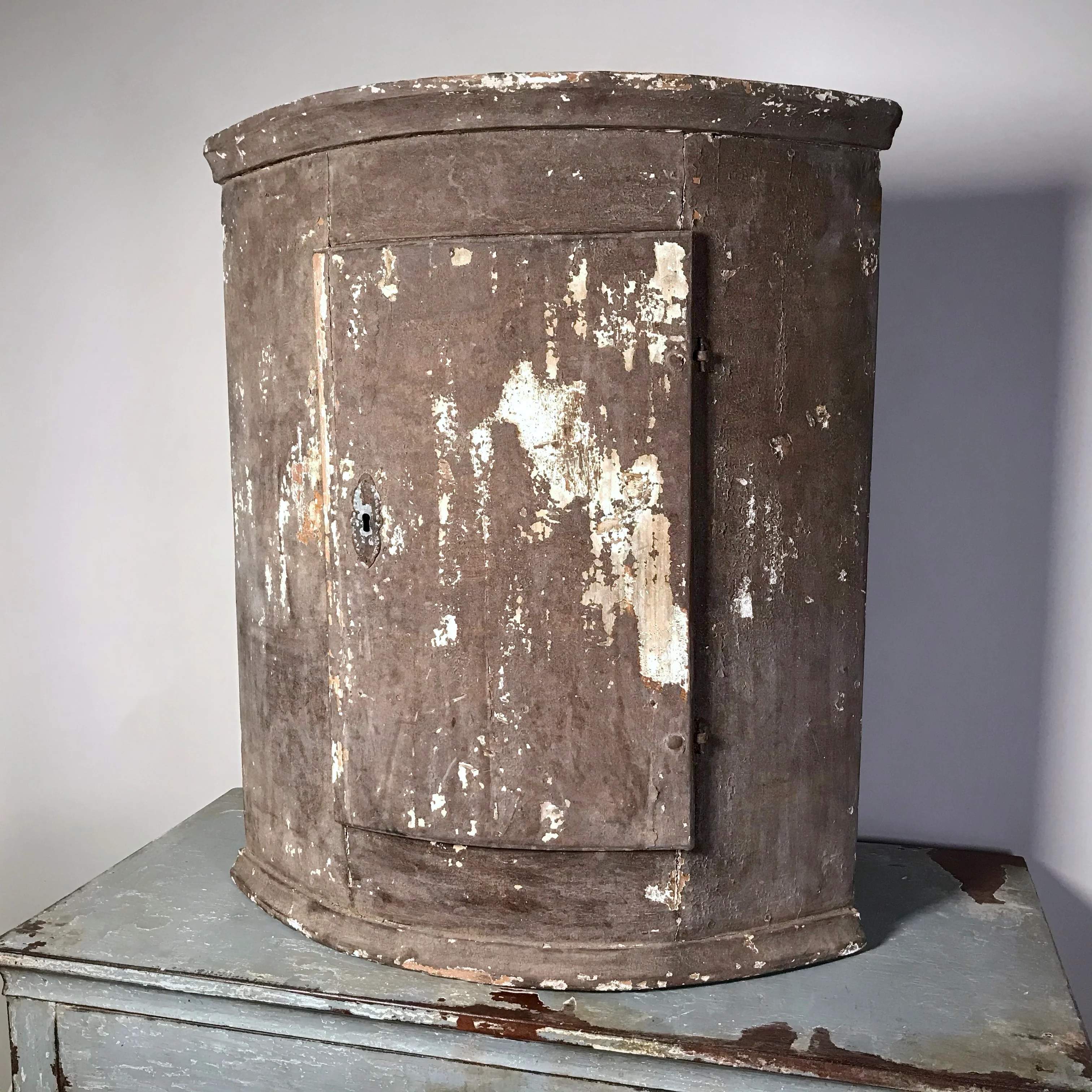
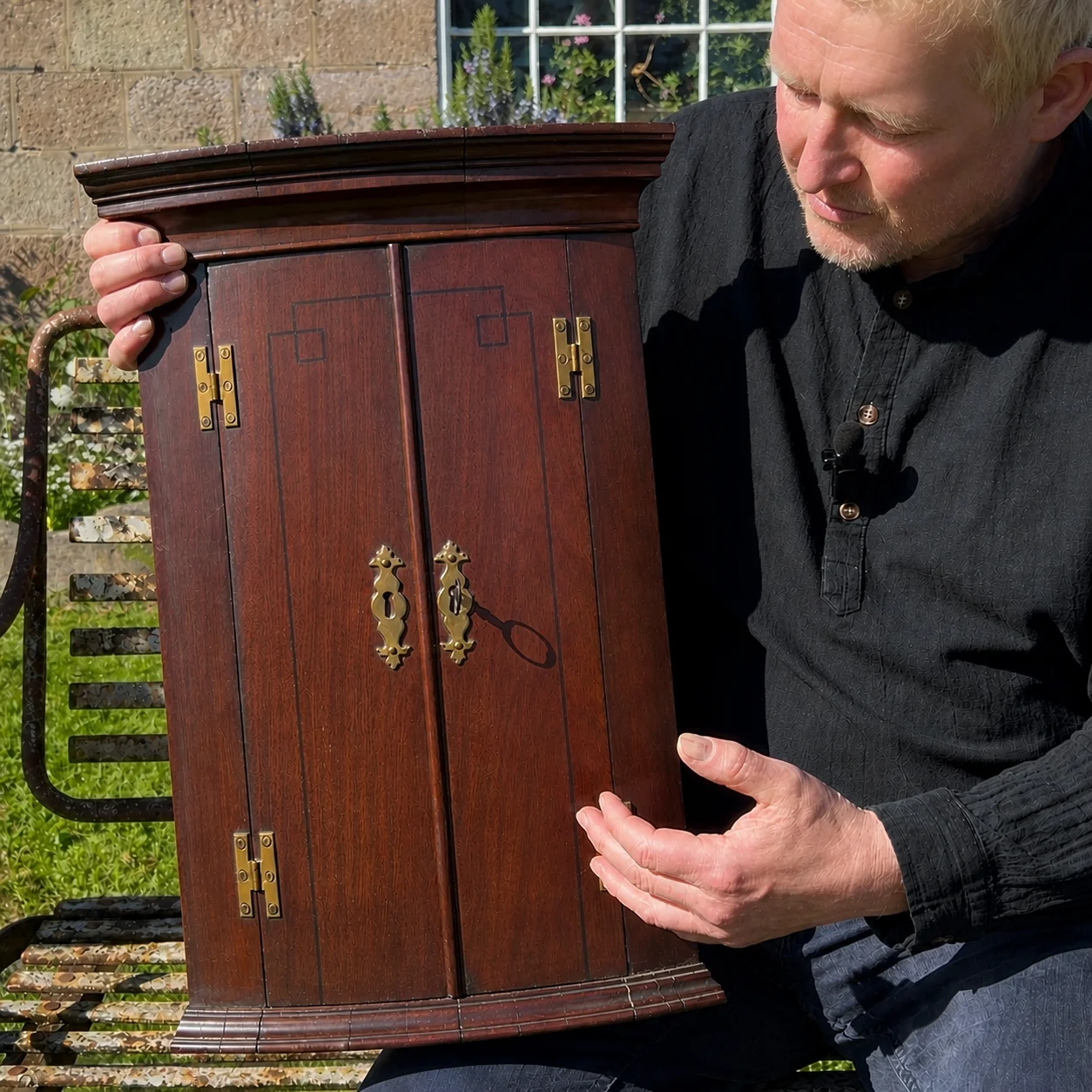
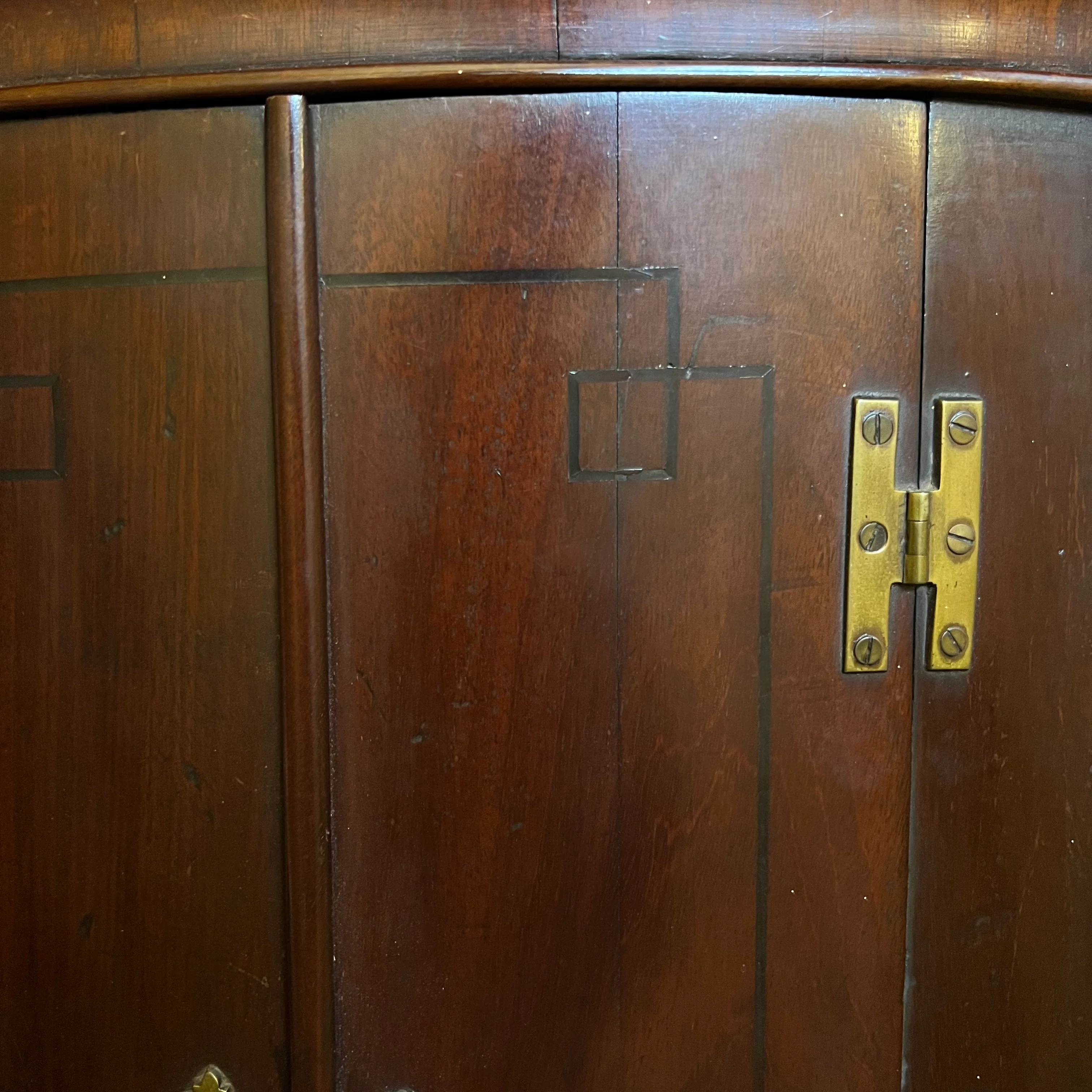
A diminutive English George III wall-mounted corner cupboard in finely figured mahogany, dating to around 1770. The piece has a pleasing bow-fronted form, its gently curved doors giving it a softness that contrasts with the crisp precision of its geometric line inlay, a detail that firmly situates it within the refined decorative language of the late 18th century.
Well constructed in selected mahogany with a rich, even tone, it retains its original character, including shaped brass escutcheons and hinges consistent with the period. The scale is particularly lovely—small yet purposeful—suggesting use in a more intimate domestic setting.
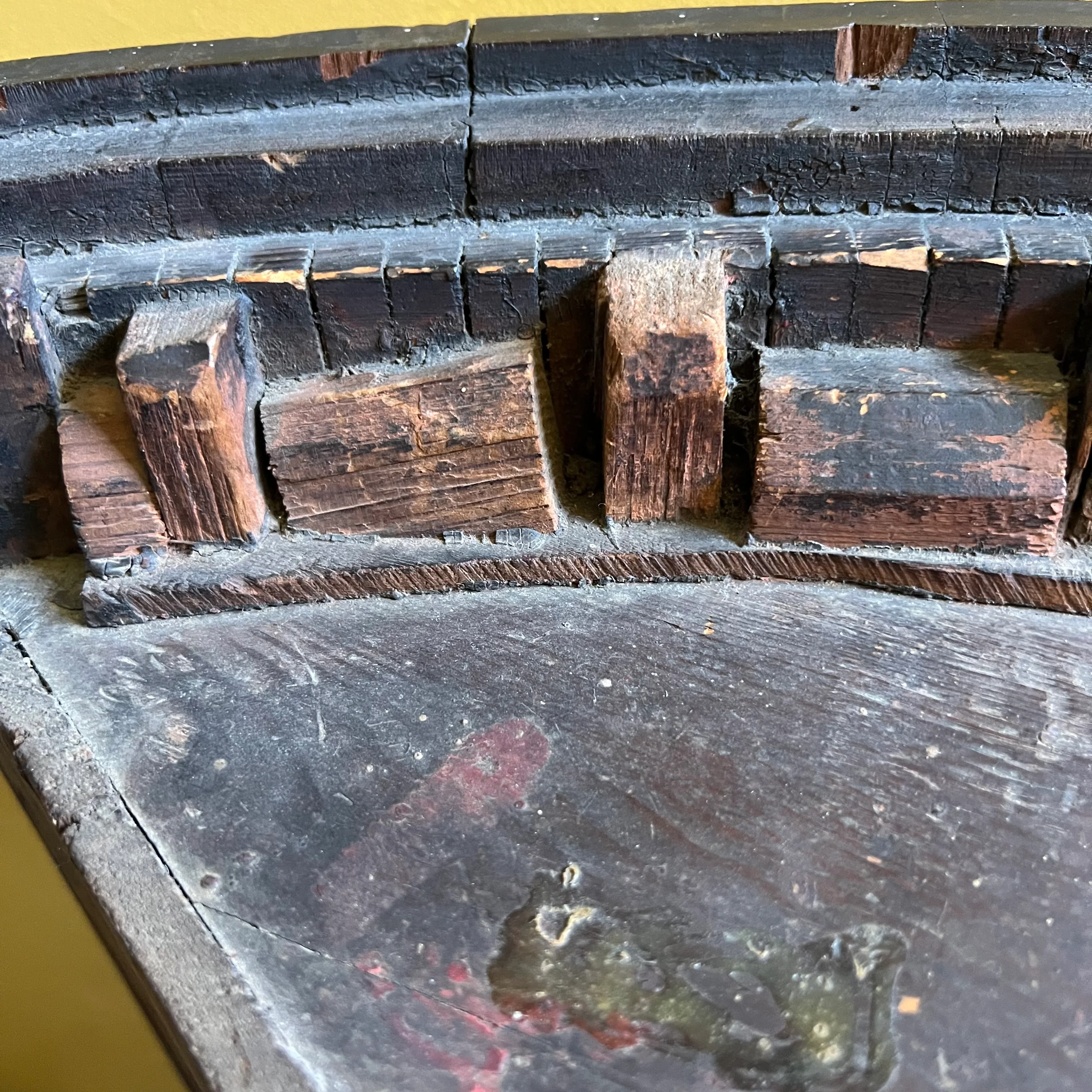
Surviving in an honest, largely untouched condition, it remains a charming and increasingly scarce example of early English furniture from the later Georgian period.
Product Information
Product Information
Shipping & Returns
Shipping & Returns






English George III Bow-Fronted Mahogany Corner Cupboard with Geometric Inlay, c.1770
English George III Bow-Fronted Mahogany Corner Cupboard with Geometric Inlay, c.1770
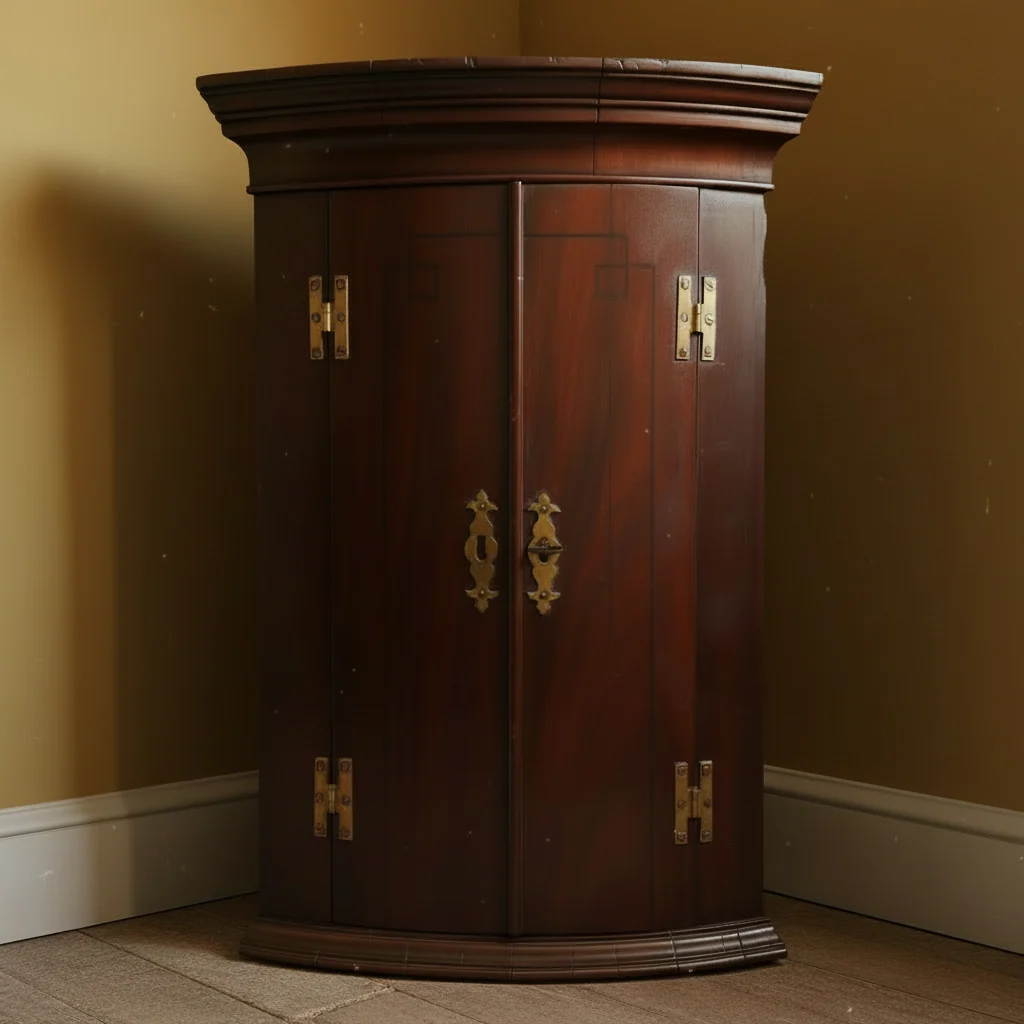
A diminutive English George III wall-mounted corner cupboard in finely figured mahogany, dating to around 1770. The piece has a pleasing bow-fronted form, its gently curved doors giving it a softness that contrasts with the crisp precision of its geometric line inlay, a detail that firmly situates it within the refined decorative language of the late 18th century.
Well constructed in selected mahogany with a rich, even tone, it retains its original character, including shaped brass escutcheons and hinges consistent with the period. The scale is particularly lovely—small yet purposeful—suggesting use in a more intimate domestic setting.
Surviving in an honest, largely untouched condition, it remains a charming and increasingly scarce example of early English furniture from the later Georgian period.
Original: $1,613.26
-65%$1,613.26
$564.64Product Information
Product Information
Shipping & Returns
Shipping & Returns
Description
A diminutive English George III wall-mounted corner cupboard in finely figured mahogany, dating to around 1770. The piece has a pleasing bow-fronted form, its gently curved doors giving it a softness that contrasts with the crisp precision of its geometric line inlay, a detail that firmly situates it within the refined decorative language of the late 18th century.
Well constructed in selected mahogany with a rich, even tone, it retains its original character, including shaped brass escutcheons and hinges consistent with the period. The scale is particularly lovely—small yet purposeful—suggesting use in a more intimate domestic setting.
Surviving in an honest, largely untouched condition, it remains a charming and increasingly scarce example of early English furniture from the later Georgian period.